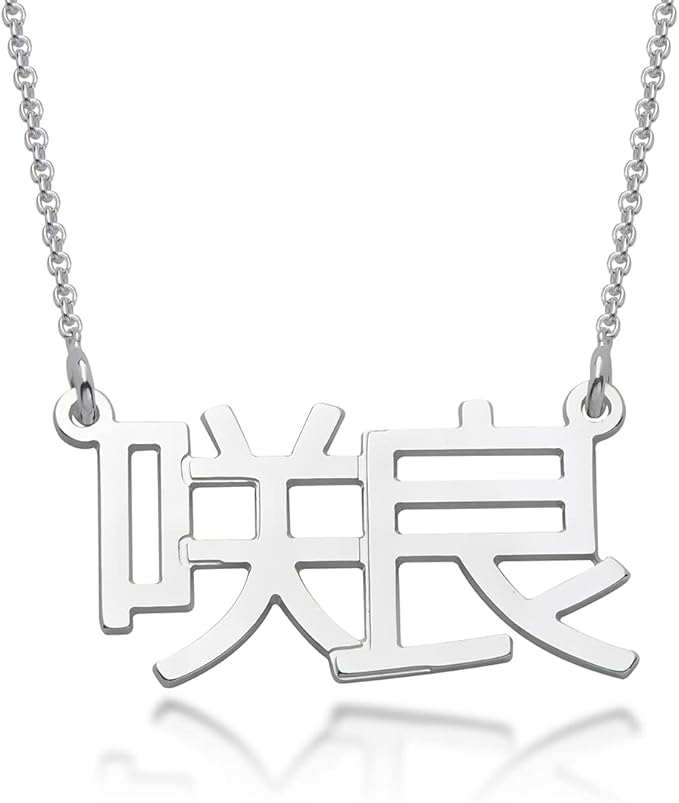
In Japanese, every person's name is chosen carefully for its kanji: the characters selected for their meaning, sound, and visual balance. A child's name might take weeks to finalise — parents weighing stroke count, associations, the way the characters sit together on paper. Names are not arbitrary here. They are considered.
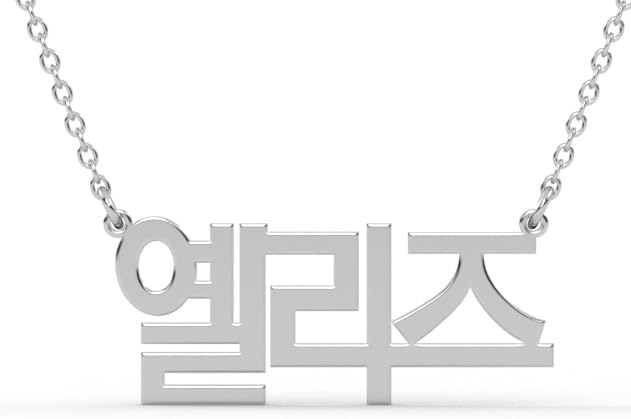
Korean names work differently — Hangul is a phonetic alphabet, precise and modern, designed in the 15th century specifically to be learnable by ordinary people rather than scholars. Your name in Hangul won't carry semantic meaning the way kanji does. What it carries is clarity: a script built for exactness, rendering the sound of your name exactly.
Either way, a name necklace in one of these scripts is not the same as a novelty font on a keyring. It requires the jeweller to understand how your name sounds — then render it correctly in a writing system with its own logic and history.
A NOTE ON TRANSLITERATION
Your name by sound, not meaning
Both Korean Hangul and Japanese katakana work phonetically — your name is rendered by how it sounds, not by what it might mean if translated literally. “Emma” becomes エマ (E-ma) in katakana, and that is where it stops: Japanese writes foreign names in katakana, not kanji. Kanji versions exist, but they are a novelty — characters picked for their sound, which a Japanese reader would not recognise as your name.
When ordering, you provide your name; the jeweller handles the conversion. For the Japanese necklace, check the preview shows katakana — and if your name has more than one plausible rendering, confirm it with the seller.